Call us now :08045479417
 Send Inquiry
 Send Inquiry
Forged Steel Globe Valve
MOQ : 2 Pieces
Forged Steel Globe Valve Specification
- Sealing
- Metal to Metal, PTFE
- Connection
- Socket Weld, Screwed, Flanged
- Material
- Forged Carbon Steel (A105), Stainless Steel
- Power
- Manual
- Pressure
- Class 150 to 800 (PN 20-130 Bar)
- Media
- Water, Oil, Gas, Steam
- Working Temperature
- -29C to 425C
- Port Size
- 15 mm to 50 mm
- Surface
- Anti-Corrosion Coated
- Shape
- Straight Pattern
- Application
- Industrial, Petrochemical, Power Plant
- Color
- Black/Silver
About Forged Steel Globe Valve
Forged steel globe valve has a design almost similar to forged steel gate valve. This valve also features two piece self aligning packing gland, bolted bonnet with spiral-wound gasket, outside screw and yoke, and integral backseat. The bonnet and body of forged steel globe valve is made from forging. Customers can also ask for locking device or any other feature upon request. They have option to select between full and standard port design, bolted bonnet and welded bonnet type. They can use this type of valve in high temperature and high pressure applications. It can be used for regulating the flow of media (oil, gas, steam, water, etc.) in pipelines of petrochemical systems, power plant, distillery plant, fertilizer plant, to name a few.
Technical Specification:
| Pressure Rating | ASME #150 to #2500 |
| Sizes | 15 mm to 50 mm |
| MFG Standards | API 602, BS 5352 (BSEN ISO 15761), BS 1873 |
| Standard Connections | Threaded Socket weld |
Features:
- Bonnet is having integral backseat and consists of stuffing box, designed as per specification of API 602 and ISO 15761.
- Body and bonnet is designed as per the dimensional requirements of standards such as API 602, ISO 15761 and ASME B16.34.
- Stem has double start ACME Thread for smooth and fast operation
- Seat ring is integral and hard faced
Reliable Flow Control Solution
This forged steel globe valve provides dependable linear flow control and long service life even under high pressure and temperature. Its robust construction with anti-corrosion coating ensures suitable operation in tough industrial environments. With metal-to-metal or PTFE sealing options and a rising stem design, it delivers precise shut-off and minimizes leakage, making it ideal for critical applications.
Versatile and Customizable Design
Offered in various end connectionsincluding BSP and NPT threaded, socket weld, or flangedthe valve is easily adapted to diverse piping requirements. A broad size range (15mm to 50mm) and material options (A105, F304, F316, F11, F22) allow customization according to process needs. Both bolted and welded bonnet configurations are available, supporting straightforward installation and maintenance.
FAQs of Forged Steel Globe Valve:
Q: How should a forged steel globe valve be installed for optimal performance?
A: Forged steel globe valves should be installed with attention to flow direction, as indicated by the arrow on the valve body. Ensure compatibility with pipe size and selected end connection (threaded or socket weld), and check that the valve is appropriately supported, particularly in high-pressure or high-temperature pipelines.Q: What types of media can the valve handle, and in which industries is it used?
A: This globe valve is capable of handling water, oil, gas, and steam, making it suitable for industrial, petrochemical, and power plant applications. Its robust construction and material options support diverse operational demands.Q: When should you choose a globe valve with a bolted bonnet versus a welded bonnet?
A: A bolted bonnet is generally preferred when frequent maintenance or inspection is needed, as it allows easy disassembly. A welded bonnet offers enhanced leak-tightness and is ideal for high-pressure or critical containment applications where maintenance access is less frequent.Q: Where can anti-corrosion coated forged steel globe valves be used effectively?
A: These valves are effective in corrosive, challenging environments where exposure to humidity, chemicals, or aggressive processes could degrade unprotected metal. The anti-corrosion coating prolongs valve life and reliability in such conditions.Q: What are the benefits of the Outside Screw & Yoke (OS&Y) and rising stem design?
A: The OS&Y and rising stem design provide visible stem movement, making it easy to determine valve position. This reduces operational errors, enhances safety, and allows for easier maintenance compared to non-rising stem alternatives.Q: How is leakage prevented, and what is the valves leakage class?
A: Leakage is controlled by precision machining, metal-to-metal or PTFE sealing, and robust bonnet joints. The valve achieves a high leakage class (Class VI), ensuring minimal emission of fluids past the seat.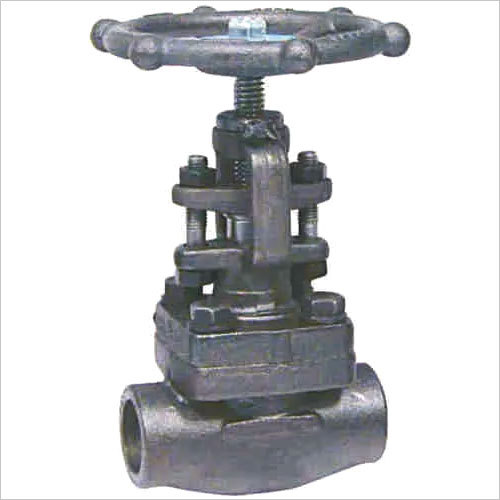
Tell us about your requirement

Price:
Quantity
Select Unit
- 50
- 100
- 200
- 250
- 500
- 1000+
Additional detail
Mobile number
Email

More Products in Globe Valves Category
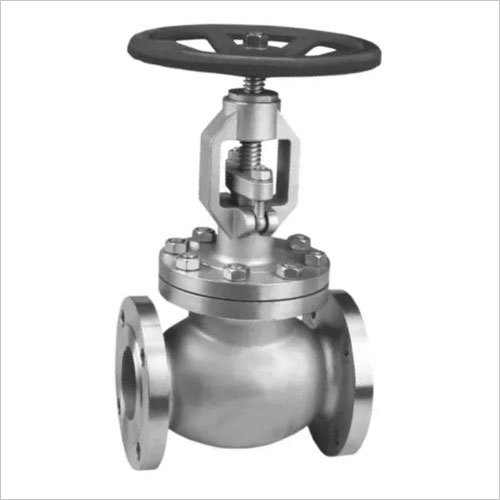
Cast Steel Globe Valve
Price 3000 INR / Piece
Minimum Order Quantity : 1 Piece
Surface : Galvanized
Media : Water
Material : Cast Iron
Usage : Industrial

 Send Inquiry


Our Products

Plot no. W-55, S-Block, MIDC, Bhosari,Pune - 411026, Maharashtra, India

Mr Venkatesh D Tammannavar
(Director)
Mobile :08045479417
 Send Inquiry
 Send SMS
Developed and Managed by Infocom Network Private Limited.
